
Every sentence an offering, every failure a gift

My second novel failed. That is how it felt when, in August 2023, The Lover, which I was so proud of as a kind psychological horror disguised as a love story, received essentially no press and no award nominations, regarding the sales figures I have been to afraid to even ask.
In the absence of the kind of coverage that my first novel received, I was left with a choice: I could quit, or I could keep going. I had to ask myself, What is the purpose of my art? If the purpose was to be admired and praised, then I had failed, and I should stop writing. But I did not want to stop writing, and so I had to ask myself anew, What is the purpose of my art? The answer that came—after a lot of grief and shame and anger and, eventually, laughing at myself—was that I make art to glorify the One Who Made Me.
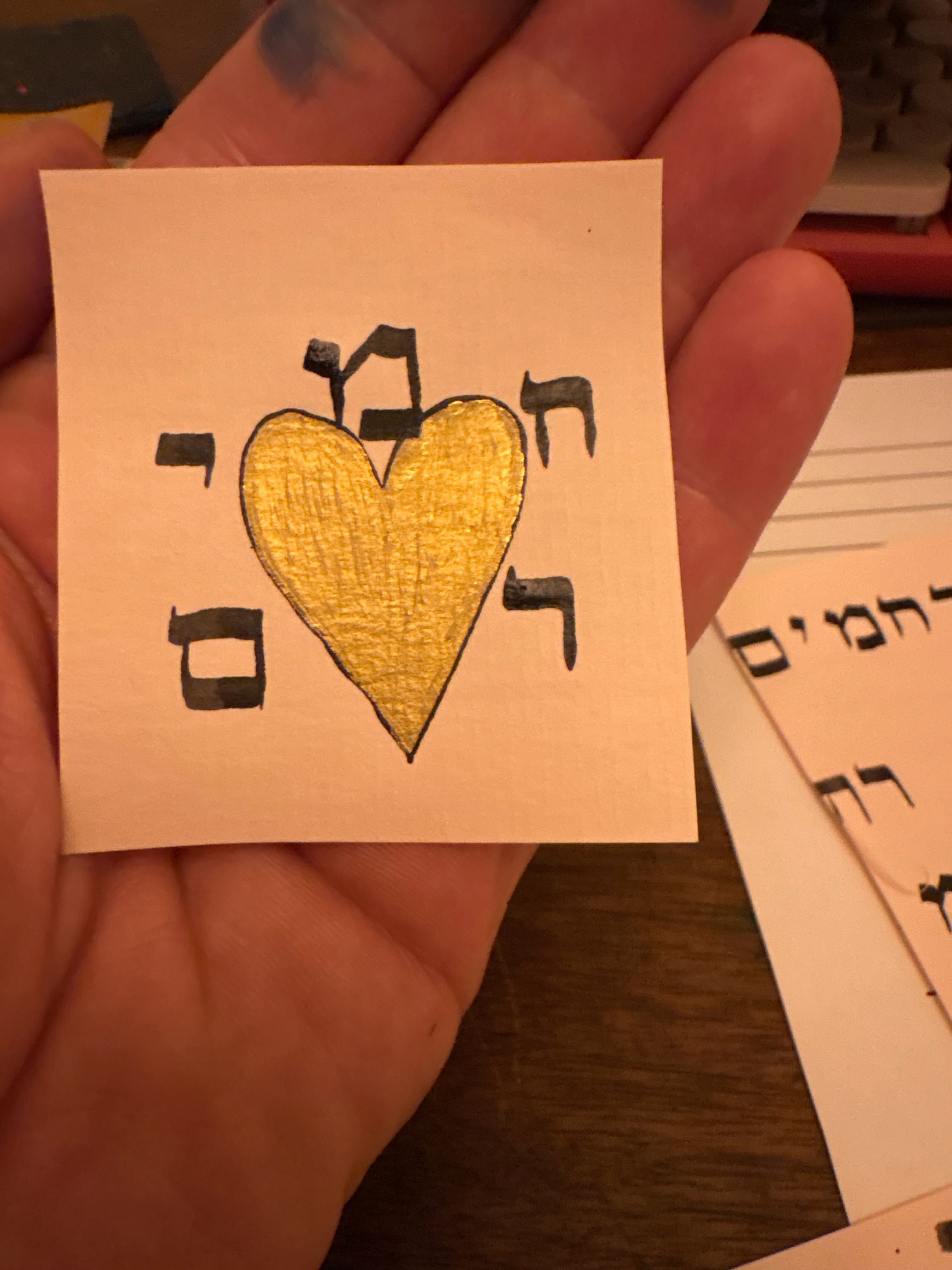
This may sound grandiose, especially as someone who routinely writes scenes of people taking dumps, but I have truly come to feel that holding on to my work as an offering to g-d is what keeps me going regardless of external markers of success or failure. This is what allowed me to find the energy and courage to write a third novel (hamsa hamsa hamsa), a draft of which is now in the hands of a few trusted readers. Ultimately, the failure of my second novel was a gift to my practice.
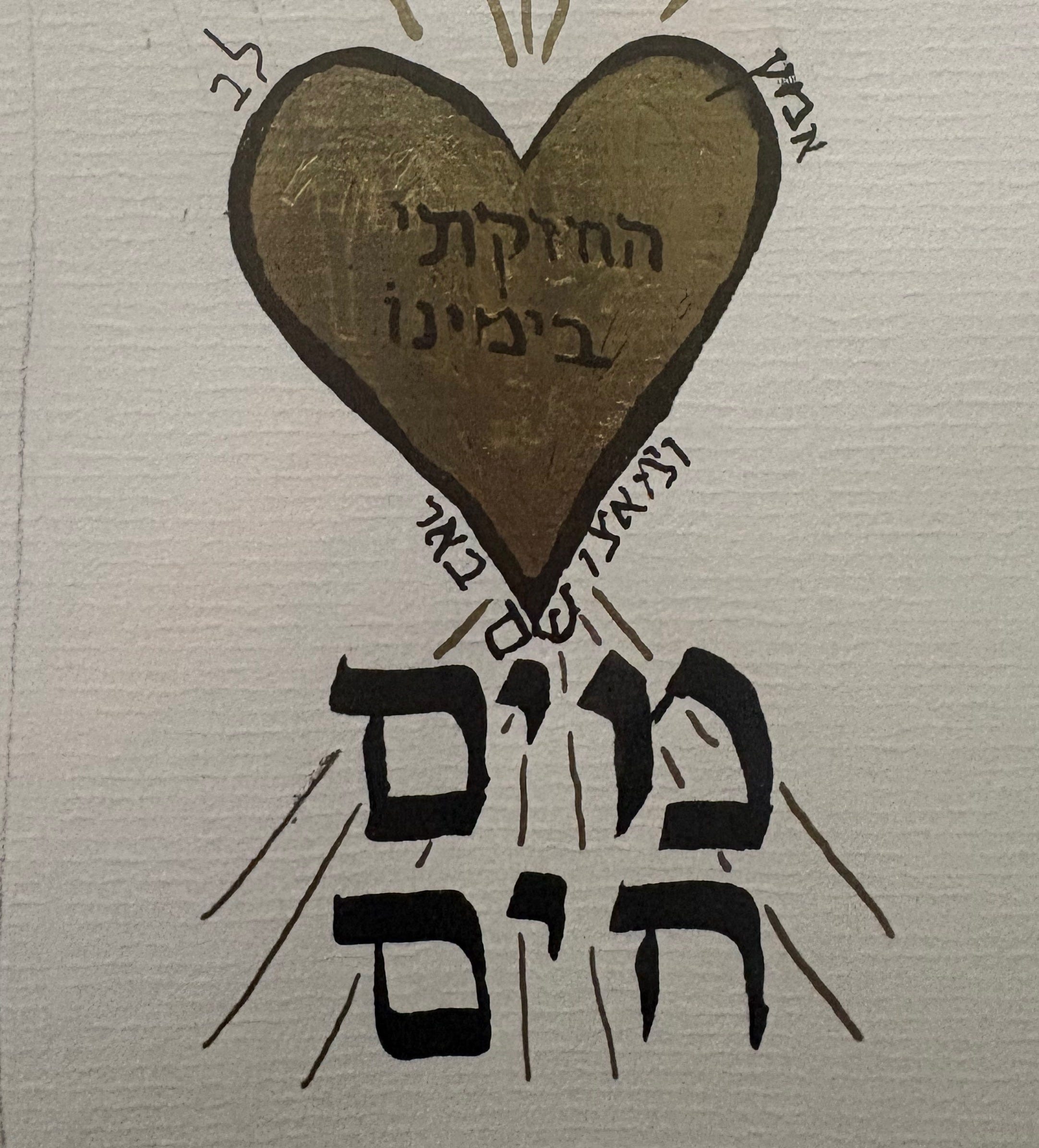
Rather than cattle-prodding myself into immediately trying to write new fiction while I wait for their feedback, I have been (1) catching up on the work that actually pays my bills (boring) and (2) experimenting with Hebrew calligraphy as shown above. Obviously today is all about (2).
The image above has letters spelling “rachamim” around a gold heart. Rachamim is the divine attribute of tender mercy and loving compassion, etymologically related to the word for womb. I made it for a friend’s birthday. (Happy birthday, Sofia!)
Here is another talisman that I made for a very dear friend who asked that I make them something related to courage:
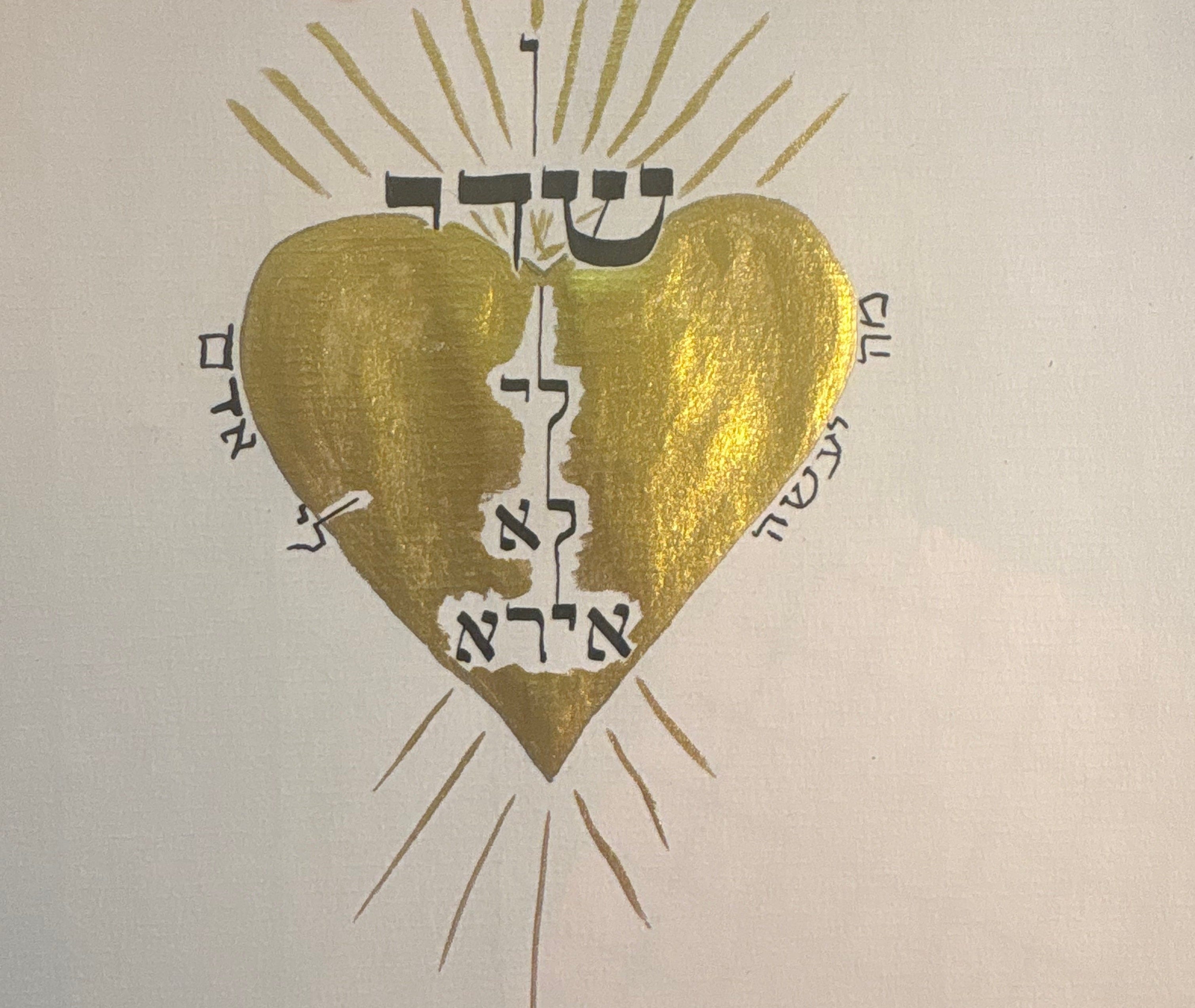
As I’m a beginner—I only began teaching myself based on the book by the late sofer stam Jay Seth Greenspan z’l a few weeks ago—I constantly make mistakes and must start over. The above took about nine tries over the course of several hours. I found a lot of pleasure in those hours. The pleasure came from the feeling that I was making an offering of love to my friend and to g-d. The wording in it comes from Psalms: Hashem is with me, I am not afraid. What can a man do to me?
What I hope is to take this mentality into all of my future fiction writing. That using beautiful instruments to write, even (especially?) when I write (in the case of my fiction) ugly things, will remind me that every sentence is an offering whether or not it is illuminated in gold.
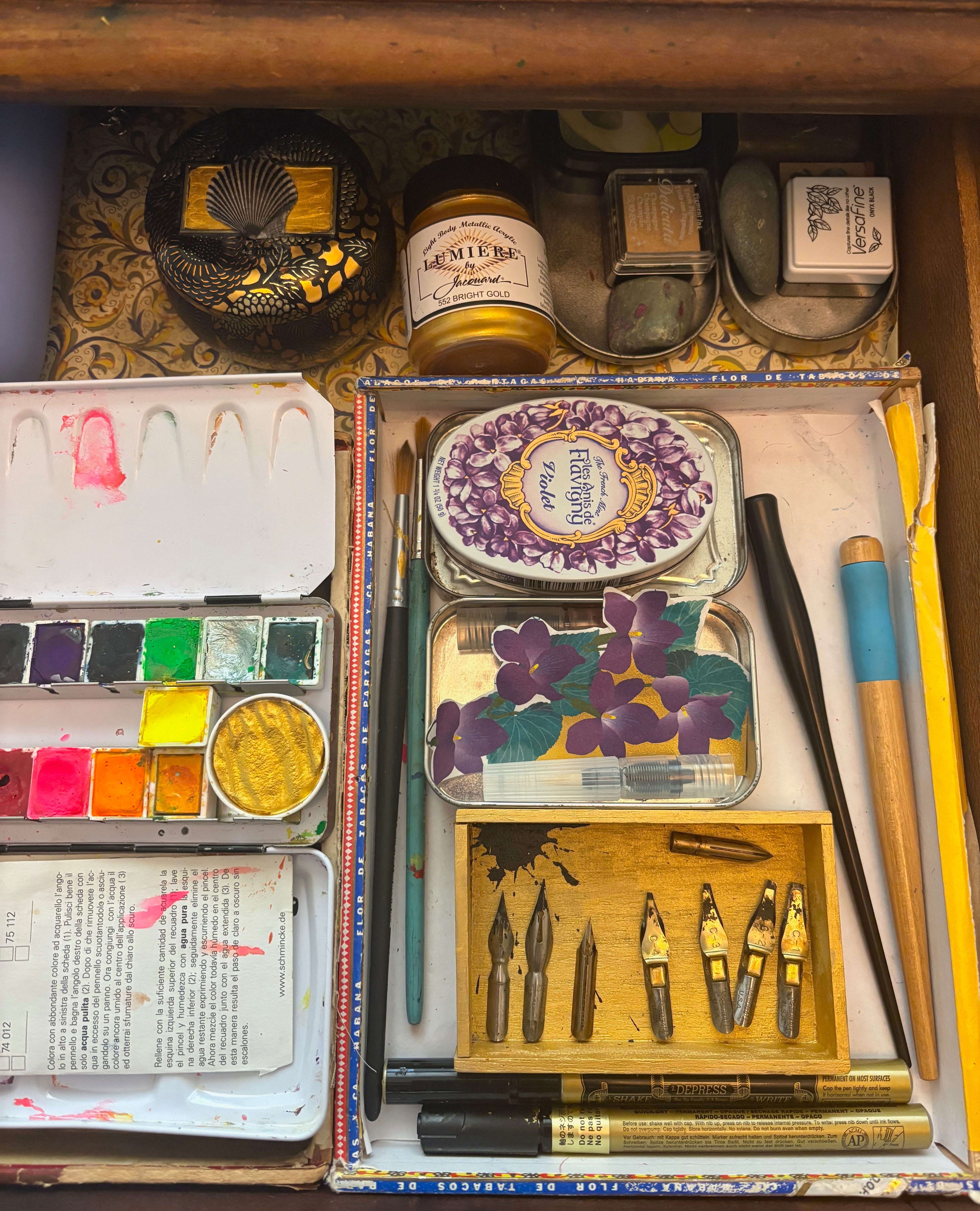
Of course, it does not hurt that I get to play with new writing implements, in this case a few wide calligraphy nibs from Speedball (about $3/each or $12 for a set with nib holder.) The ink is “India ink” (does this refer to old trade routes?) which you can find at any art store for about $5.
Here is a piece I made for my sister’s home with a verse from Isaiah: “You will go out in gladness and return home in peace.” I love playing with connecting letters and illumination.
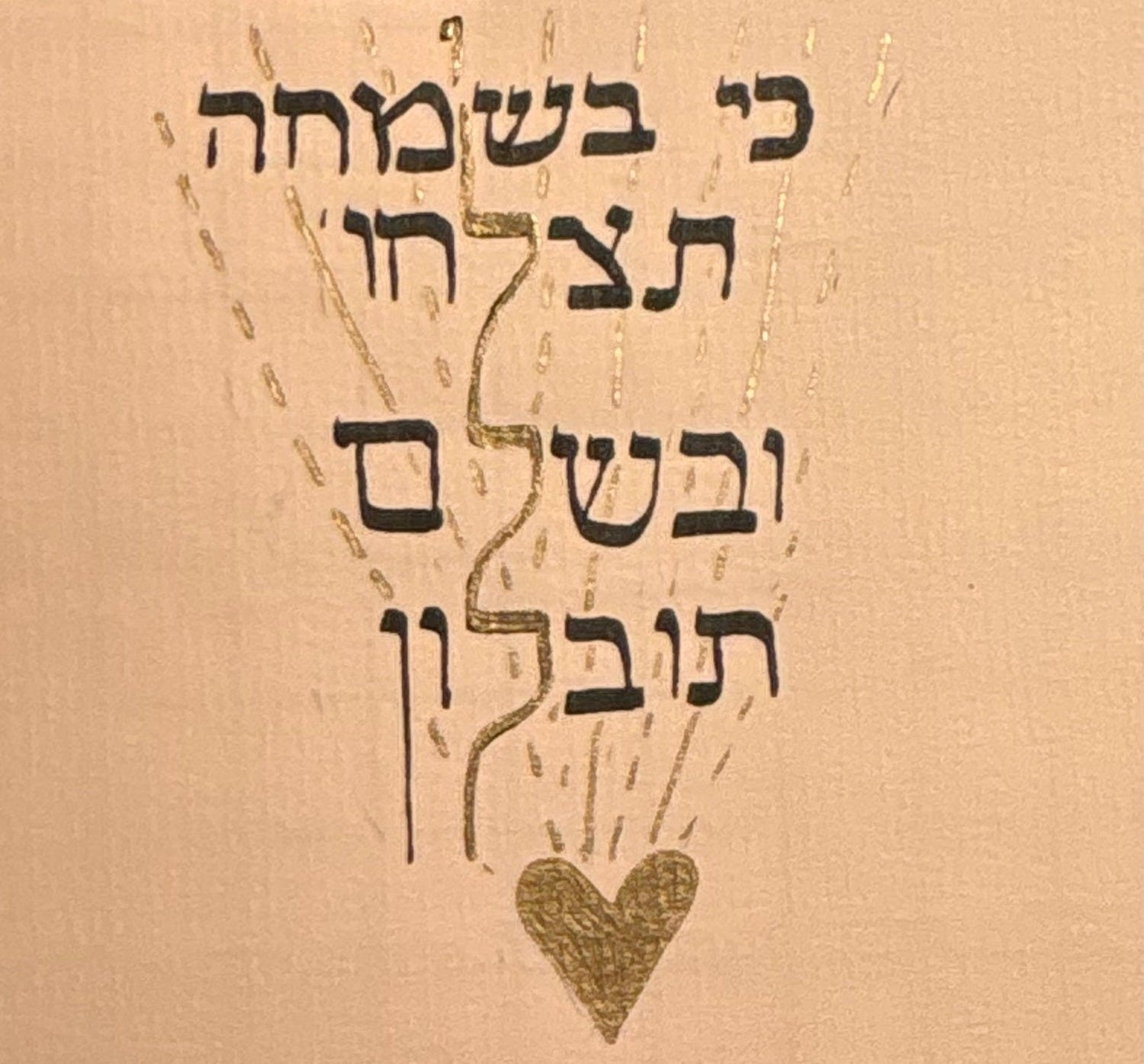
Now the gold is another story. I love the illuminated look, and my first attempts were with a Sakura gold paint pen ($3.20) that I already owned. As you can see in the lettering I did for my sister, the look is indeed very nice and metallic. Below is another example with gold paint pents, one I made for a very dear friend using two biblical verses, featuring most prominently a words from Genesis 26 about living waters. (This friend requested that I make something related to taking creative risks, and I liked the idea of her creativity as an inner well of living water):
However, I worried about the gold pen being harder to control (sometimes it globs out) and also becoming expensive in the longterm if I had to keep rebuying, since there is relatively little paint in each pen. After a bit of reading, I found that a lot of calligraphers use watercolor paint as ink, which is certainly more affordable in the longrun, so now I am using a beautiful pan of gold watercolor by Colico (formerly Finetec), $7.
If you happen to be interested in commissioning a talisman or other piece of Hebrew calligraphy from me, you’re welcome to email me or respond to this newsletter. We can talk about what you’re looking for and I’ll be happy to suggest wording.
A final word about failure. Putting yourself out there is such a huge part of getting art into the world. It is also exhausting to get so many rejections! My dear friend Lucky, following the advice of the great Beth Pickens, suggested that we incentivize the process by giving ourselves a sticker every time we get a rejection. In the last seven weeks I have amassed a beautiful sticker collection celebrating each no.
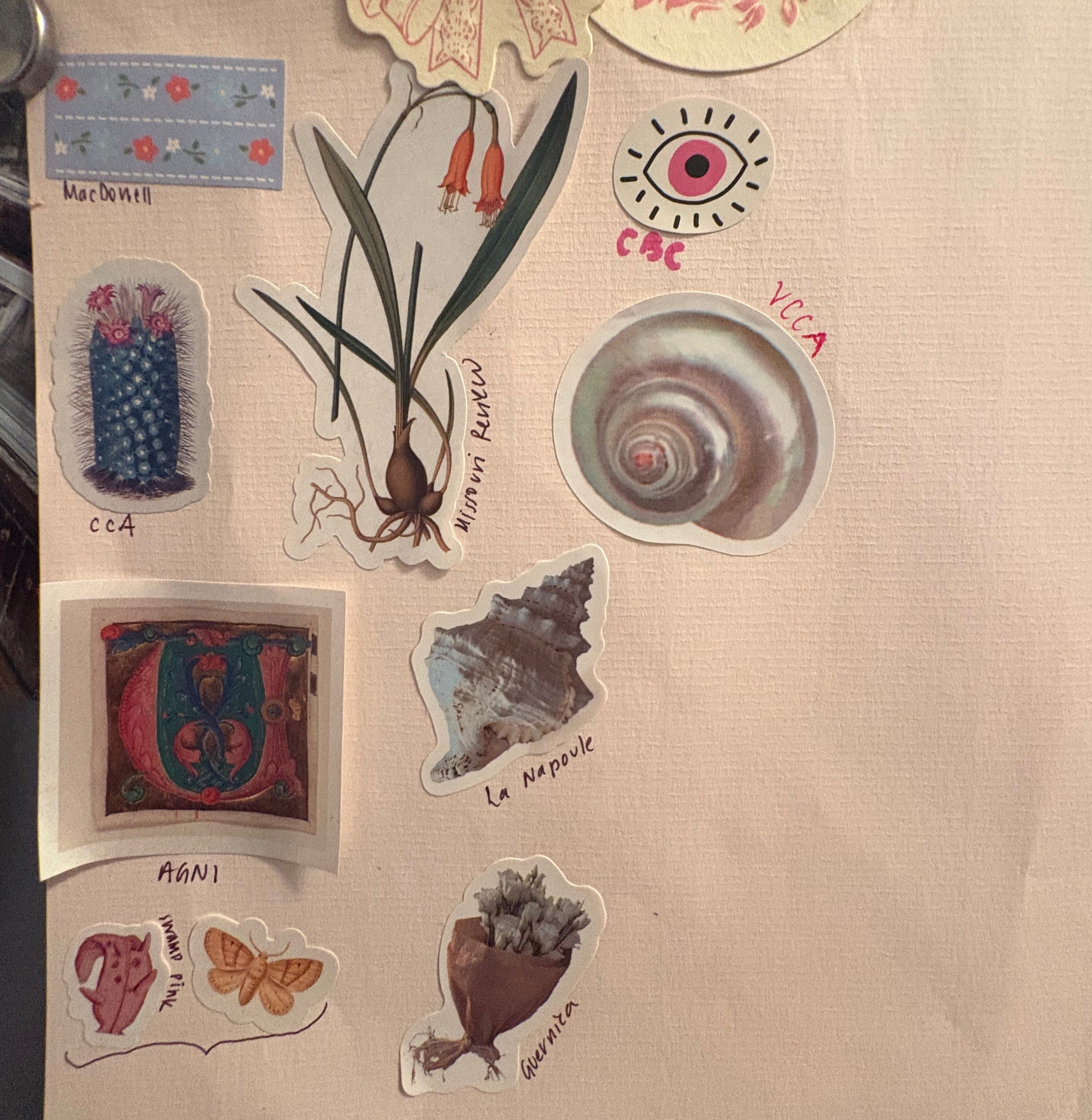
I highly recommend starting your own, or finding another way to celebrate each rejection. Today, when I got rejected for a VCCA residency, my first thought wasn’t that I was sad or disappointed. It was, Now I get to use that beautiful shell sticker! In this way a million others, every failure really is a gift.
Both of your novels are beautiful and important works. I look forward to reading your third!
I love how much art on paper, or the art...of...paper?... weaves into your writing life. All of it beautiful. It's so tough to read about rejection, and I hate that it's "a normal" part of this process. Thanks for writing about it with your trademark plucky honesty. xx