
Sometimes your manuscript is 90 feet long
Novel problems, novel solutions

Much of the relationship to materials that I share about in this newsletter comes down to how I coax myself to do the hard thing. Often, that hard thing is starting again: another draft, another point of view, another story. Recently, that approach has led me to create a scroll of paper so long that it is slowly taking over my home.
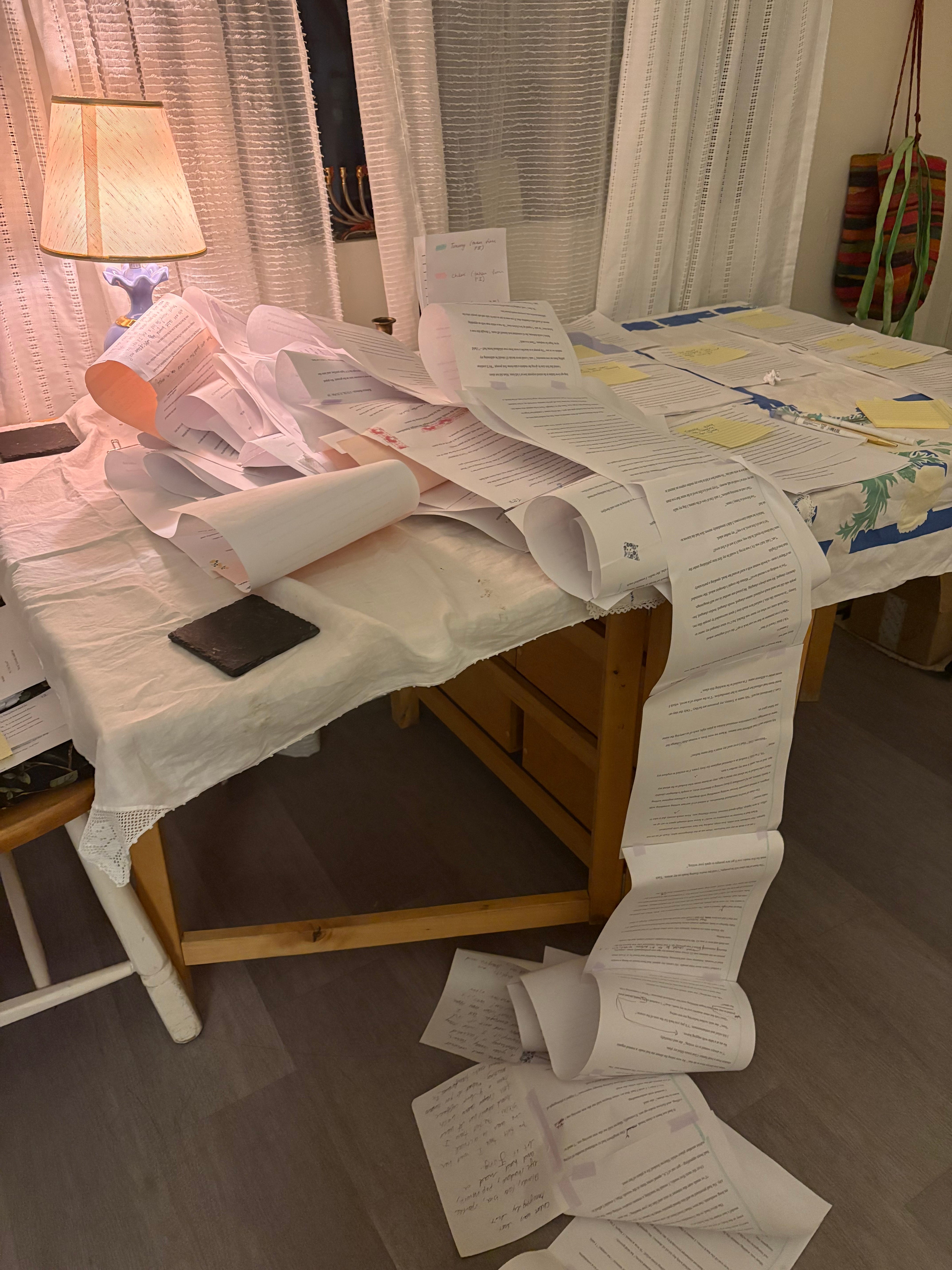
What possessed you to do such a thing?
A great question. For the past eight months or so, I’ve been working on a new manuscript. Recently, I felt myself tugged toward a big change. What I’d written as a two-part story wanted to be a single narrative. I could feel it. Essentially, I had to take Part I and weave it into Part II.
The problem: the manuscript was already at 200 pages. On the emotional and psychic level, it’s exhausting to move around so much material in such a significant way. The idea of doing this on the computer made me feel ill. Moving around paragraphs and sections feels so meaningless and random on a screen. I knew I wanted to work in hardcopy. But how to really feel the flow of the book? And how to deal with so many pages? It was certainly more than I could fit on my previously-documented clothesline system, which at most can hold 40 pages.
You can’t think your way out
There are very few problems in my life I’ve ever been able to think myself out of. Mostly, I have just tried things and if they feel right I keep doing it, and if they feel wrong I try something else. Some people might call this trusting G-d.
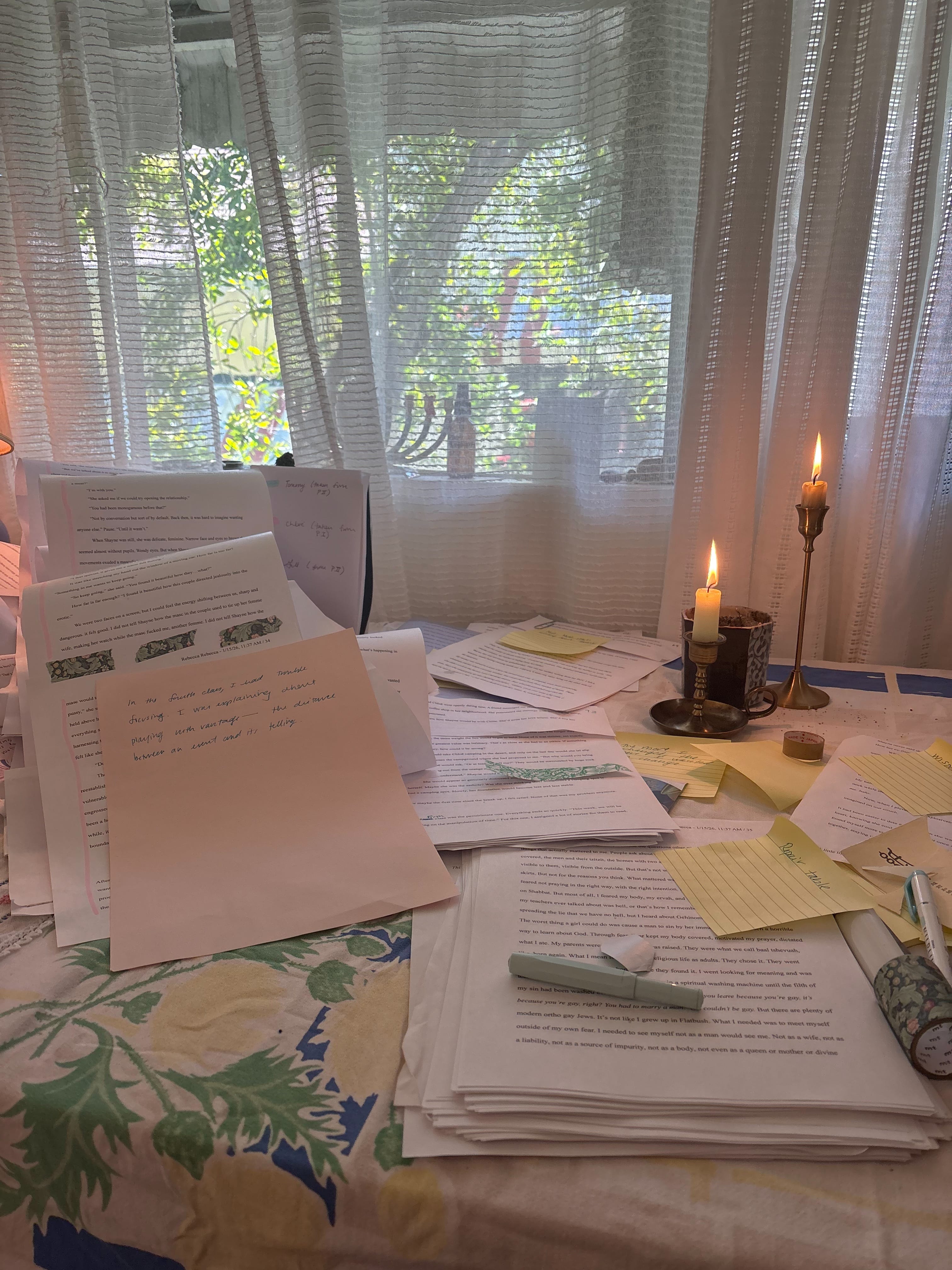
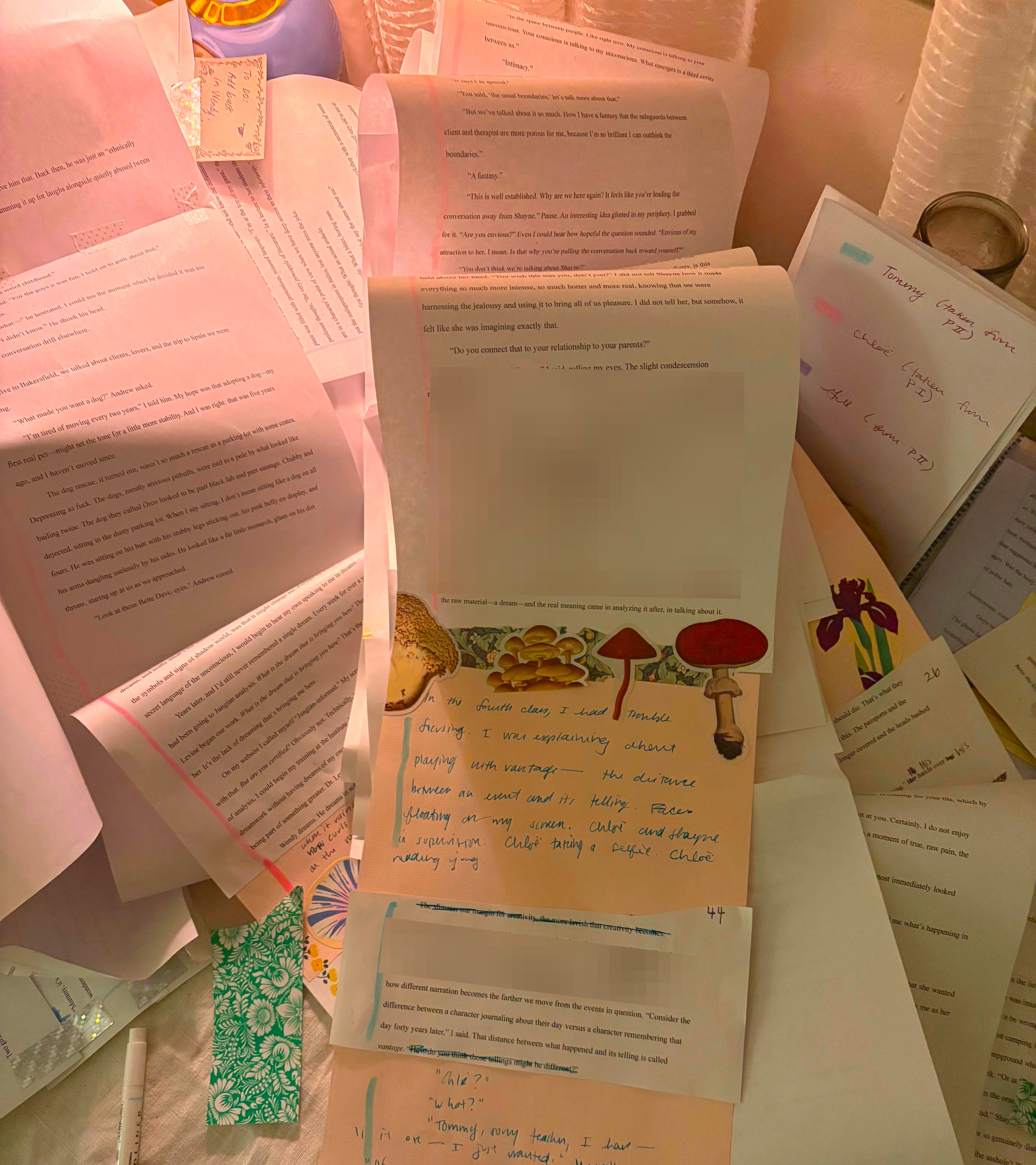
So a few days ago, I began to put my previously-documented washi tape collection to use by taping together the pages of my manuscript into one long scroll. This allowed me to pull together pages from both parts. So for example, page 71 might follow page 4, which might follow pages 2 and 23 spliced together.
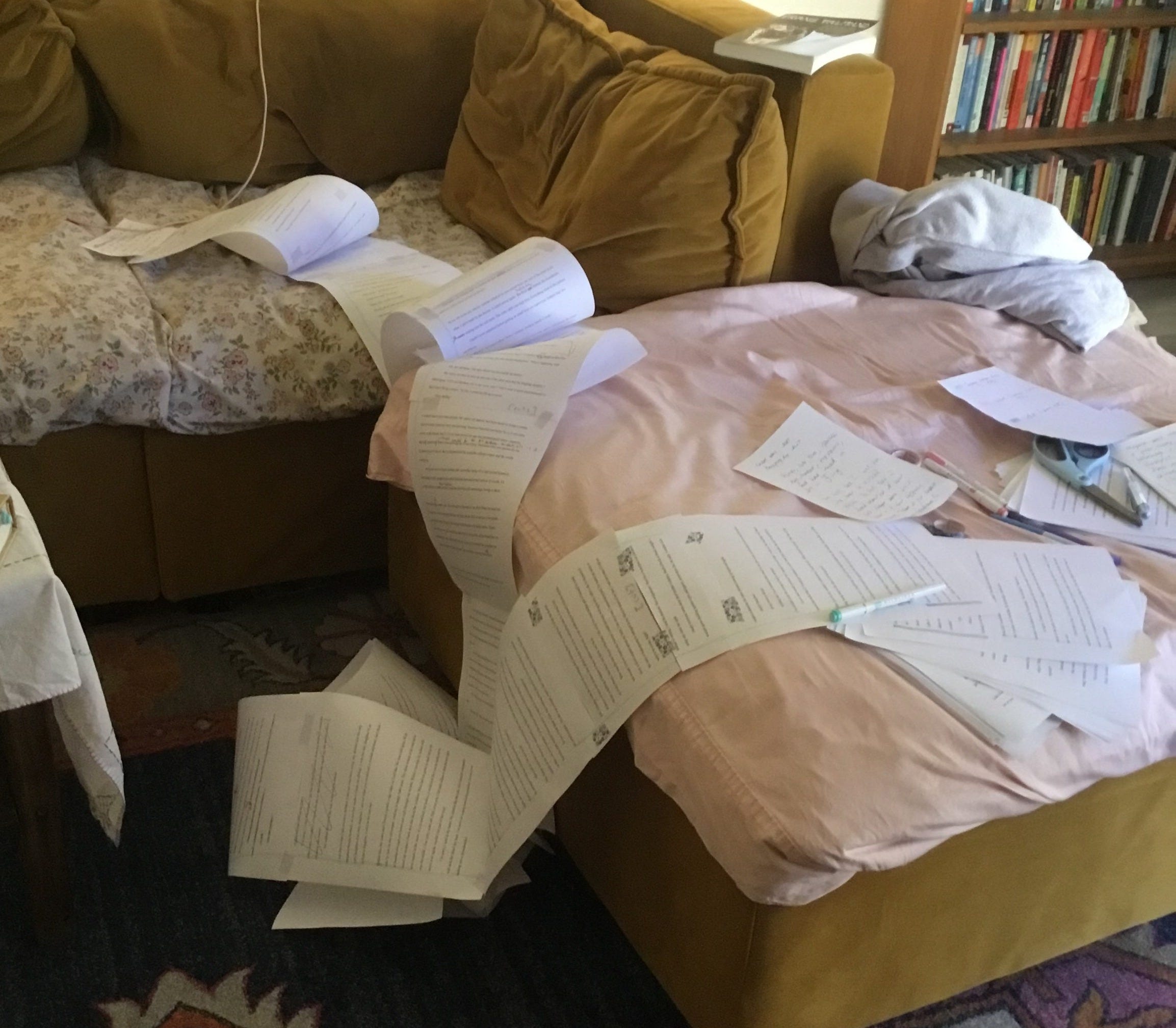
I’ve never editing this way before, but I’m enjoying it. Something about the flow of pages makes it feel intuitively clear what is there and what is missing.
Many paragraphs, pages, or even whole chapters have been cut through this process. Other sections have needed to be written from scratch. Rather then get on my computer, I write the inserts by hand. I’m going through my pink Crown Mill laid paper at an alarming rate. And what of it! What’s the point in having beautiful things if you don’t enjoy them? Brooke Astor wore her emeralds below 14th Street; I use my stationery supplies with abandon.
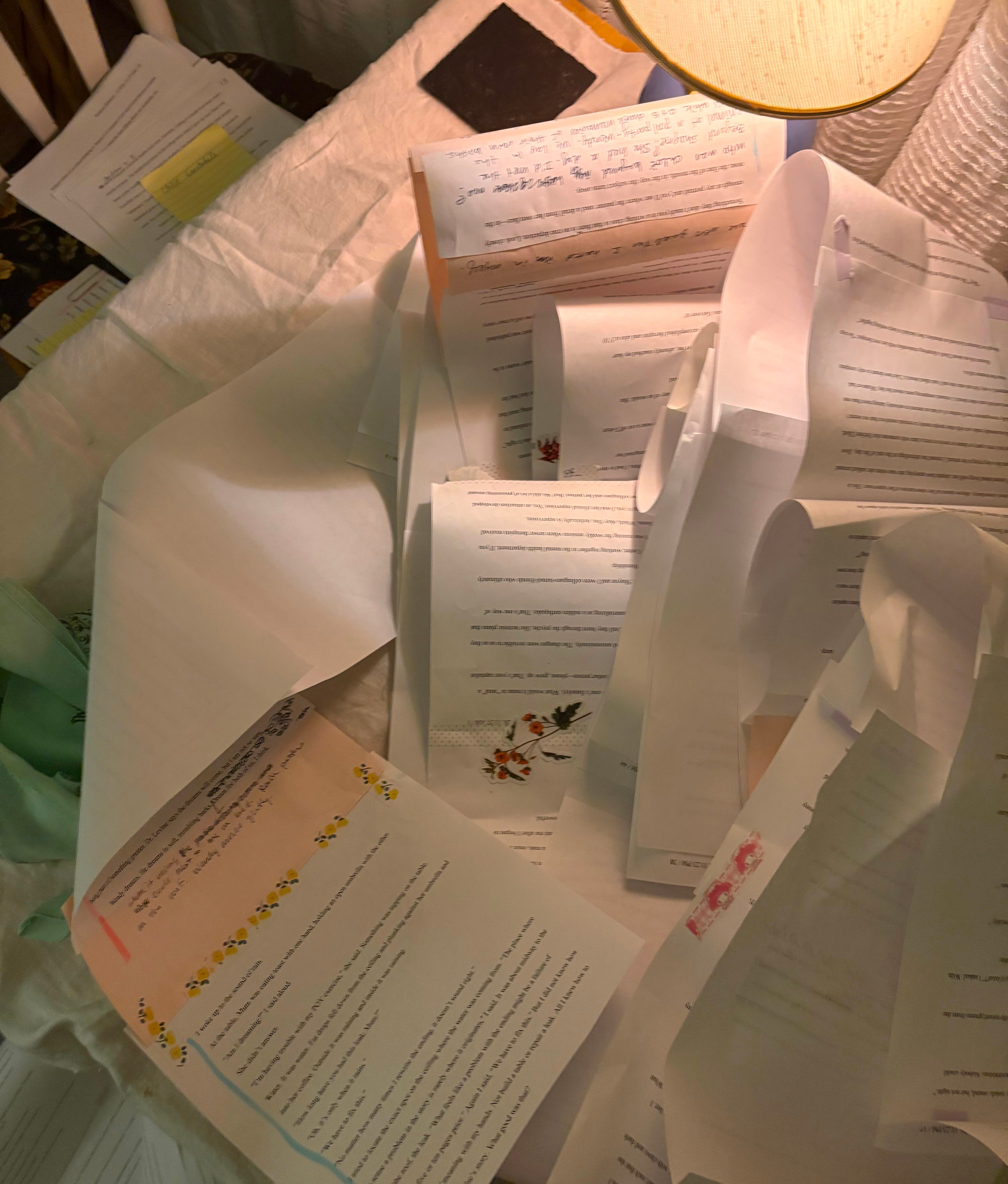
To make sure I can navigate this scroll—which is now at least 90 feet long—I’ve used highlighters in the margins: blue for the pages pulled from Part II, pink for the pages from Part I, and purple for something too complicated to explain at this moment.
To delineate chapter breaks, I’ve allowed myself the indulgence of using as many stickers as I like.
Known unknowns
I wish I could say that I knew this was going to work out. That these pages would yield my best writing yet. But I honestly have no idea. What I do know is that letting myself play with the process in this way gave me the energy to do something quite emotionally overwhelming: reimagine the project entirely.
Products in this post
Crown Mill classic laid paper pad, A4, pink.
Yamamoto Writing Pad - Tomoe River, A5.
mT solids washi tapes, Pastel Lavender and Ganshin Cherry Blossom.
Daiso washi tapes, assorted.
Stickers from the Botanist’s Sticker Anthology (thank you, Lucky!)
Zebra Mildliner double-sided highlighters.
Pilot Iroshizuku bottled ink, Yama-Budo.
That Pilot ink, by the way, is probably one of the products I’d ask to be buried with were that kosher. This brings me to a question:
When I rewrote my ms from a braided narrative to a straight up chronological one, I had to print everything out and lay it all about my floor to reimagine, cut, gather, splice. Next time, I’ll totally use stickers.
Incredible